
VBT-BD SERIES · UCO TO B100 BIODIESEL
Used Cooking Oil
Biodiesel Plant
Complete UCO-to-B100 Production Line
A complete production line that converts used cooking oil into B100 biodiesel through feedstock pretreatment, esterification, two-stage transesterification, glycerol separation, methanol recovery and final purification.
5–100+ t/day
Processing Capacity
Used Cooking Oil
Primary Feedstock
B100 Biodiesel
Final Product
PLC + HMI
Automatic Control
——– 01
Product Overview & Standards
The VBT-BD Used Cooking Oil Biodiesel Plant converts UCO into B100 biodiesel. Plant configuration is based on actual feedstock quality and the target market standard.
FINAL PRODUCT
B100 Biodiesel
Produced from used cooking oil for use as neat biodiesel or as a diesel blending component, subject to local regulations and final testing.
EUROPEAN TARGET
EN 14214
Engineering can be based on the selected EN 14214 fuel-quality targets.
U.S. TARGET
ASTM D6751
Engineering can be based on ASTM D6751 requirements for B100 blendstock.
01
Product Output
One final product: B100 biodiesel made from used cooking oil.
02
Target Standard
Choose EN 14214 or ASTM D6751 before plant engineering and configuration.
03
Quality Verification
Finished-product laboratory testing confirms compliance; color alone does not determine fuel quality.
≥96.5%
EN Ester Target
≤0.020%
Free Glycerol
≤0.50
Acid Value mg KOH/g
1 Product
B100 Biodiesel
——– 02
Applicable Feedstock
This plant is designed for used cooking oil. Feedstock analysis determines pretreatment, esterification, catalyst dosage and final purification.
PRIMARY FEEDSTOCK · UCO
Used Cooking Oil
Collected frying oil and food-service cooking oil after preliminary removal of food particles. Every batch is tested before processing.
RECOMMENDED PROCESS
Heating & filtration → Vacuum dehydration → Conditional esterification → Transesterification
Plant Configuration
Standard UCO pretreatment
Design Basis
Acid value, water, insoluble impurities, phosphorus and metals.
HIGH ACID VALUE UCO
High-FFA UCO
Used cooking oil with elevated free fatty acids. Acid esterification is added before the alkaline reaction section to reduce soap formation.
RECOMMENDED PROCESS
Filtration → Vacuum dehydration → Acid esterification → Two-stage transesterification
Plant Configuration
Esterification + transesterification
Design Basis
Esterification endpoint and catalyst dosage are confirmed by feedstock testing.
RESTAURANT & FOOD FACTORY OIL
Used Frying Oil
Frying oil collected from restaurants, central kitchens and food-processing plants. Fine filtration and controlled dehydration protect the reaction system.
RECOMMENDED PROCESS
Screening → Fine filtration → Vacuum dehydration → Reaction → Purification
Plant Configuration
Enhanced solids removal
Design Basis
Particle load, water, acid value and oxidation condition.
PRIMARY FEEDSTOCK · UCO
Recovered Food-Service Grease
Pumpable, pre-treated grease recovered from food-service operations. Configuration depends on water, solids and free-fatty-acid content.
RECOMMENDED PROCESS
Feed conditioning → Filtration → Dehydration → Esterification as required → Reaction
Plant Configuration
Project-specific pretreatment
Design Basis
A representative laboratory report and sample trial are required.
FEEDSTOCK SCOPE
The standard plant is engineered for UCO and related food-service oils. Petroleum waste oil and pyrolysis oils cannot be converted into biodiesel by transesterification.
——– 03
Plant System
The complete line integrates UCO pretreatment, reaction, phase separation, methanol recovery, biodiesel purification and automatic control.
VBT-BD · COMPLETE PRODUCTION LINE
01
02
03
04
Used Cooking Oil Biodiesel Plant
Feedstock
Used cooking oil
Final product
B100 biodiesel
Capacity
5–100+ t/day
Reaction
Esterification + two stages
Separation
Centrifuge or rapid settling
Methanol
Recovery + rectification + recycle
Purification
Polishing + vacuum distillation
Control
PLC + HMI
——– 04
Biodiesel Production Process
Methanol is rectified for reuse. Biodiesel is purified by polishing, thin-film evaporation and, where required, high-vacuum molecular distillation.
PROCESS STEP 01
01
Used Cooking Oil Biodiesel Plant
For high-FFA UCO, free fatty acids react with methanol under acid catalysis before alkaline transesterification, reducing soap formation.
PURPOSE OF THIS STEP
Defines pretreatment and reaction conditions
PROCESS STEP 02
02
Filtration & Vacuum Dehydration
Heat the UCO to reduce viscosity, remove solid contaminants and lower free water before the reaction section.
PURPOSE OF THIS STEP
Produces clean, low-water feedstock
PROCESS STEP 03
03
Conditional Acid Esterification
For high-FFA UCO, free fatty acids react with methanol under acid catalysis before alkaline transesterification, reducing soap formation.
PURPOSE OF THIS STEP
Prepares high-acid UCO for transesterification
PROCESS STEP 04
04
First-Stage Transesterification
Pre-treated oil, low-water methanol and alkaline catalyst are accurately dosed and reacted to form fatty acid methyl esters (FAME) and glycerol.
PURPOSE OF THIS STEP
Forms a crude biodiesel and glycerol mixture
PROCESS STEP 05
05
Intermediate Glycerol Separation
A centrifuge or controlled rapid settling removes most of the glycerol phase before the second reaction stage.
PURPOSE OF THIS STEP
Avoids traditional 8–12 hour settling
PROCESS STEP 06
06
Second-Stage Transesterification
Additional methanol and catalyst drive the reversible reaction further, reducing residual mono-, di- and triglycerides.
PURPOSE OF THIS STEP
Improves conversion and product consistency
PROCESS STEP 07
07
Biodiesel / Glycerol Separation
Temperature and phase interface are controlled to separate crude biodiesel from crude glycerol for independent downstream treatment.
PURPOSE OF THIS STEP
Sends crude biodiesel to methanol removal
PROCESS STEP 08
08
Methanol Recovery & Rectification
Methanol is recovered from both biodiesel and crude glycerol streams, then rectified to remove water before reuse.
PURPOSE OF THIS STEP
Reduces fresh methanol consumption
PROCESS STEP 09
09
Water Washing or Dry Polishing
Depending on the project, washing, adsorbent or ion-exchange polishing removes soap, catalyst and polar contaminants.
PURPOSE OF THIS STEP
Reduces soap, catalyst, salts and metals
PROCESS STEP 10
10
Thin-Film Evaporation
Under vacuum, residual methanol, water and light components are removed with a short high-temperature residence time.
PURPOSE OF THIS STEP
Stabilizes B100 biodiesel quality
PROCESS STEP 11
11
High-Vacuum Molecular Distillation
Short-path molecular distillation can remove high-boiling contaminants, pigments and residual glycerides where the target specification requires it.
PURPOSE OF THIS STEP
Provides the final purification step for B100
FEEDSTOCK
Used Cooking Oil
REACTION
Esterification + Transesterification
SEPARATION & RECOVERY
Glycerol + Methanol
FINAL PRODUCT
B100 Biodiesel
——– 05
EPCM Services
VBOLT supports design-basis confirmation, engineering, manufacturing, installation, commissioning, training and plant operation.
PROJECT STAGE 01
Design Basis Confirmation
Confirm feedstock analysis, capacity, target standard, annual operating hours and local utility conditions.
VBOLT Work
Stage Deliverables
PROJECT STAGE 02
Process & Engineering Design
Complete mass balance, process flow, major equipment selection, control philosophy, utilities and preliminary layout.
VBOLT Work
Stage Deliverables
PROJECT STAGE 03
Manufacturing & FAT
Manufacture core equipment, modular piping, platforms, instruments and control cabinets to approved engineering documents.
VBOLT Work
Stage Deliverables
PROJECT STAGE 04
Installation & Commissioning
Support installation checks, cold and hot commissioning, feed introduction, parameter optimization and performance runs.
VBOLT Work
Stage Deliverables
PROJECT STAGE 05
Training & Operating Support
Train the operating team on startup, shutdown, quality control, equipment maintenance and safe methanol handling.
VBOLT Work
Stage Deliverables
——– 06
Core Process Technologies
Four process systems address UCO variability, reaction conversion, methanol recycling, final purification and continuous separation.
CORE TECHNOLOGY 01
Esterification + Two-Stage Transesterification
High-FFA UCO is esterified first. Glycerol is removed after the first transesterification stage, then a second methanol and catalyst dose drives conversion further.
01 Reduces soap and emulsion risk
02 Lowers residual glycerides
03 Handles variation in UCO acid value
PROJECT STAGE 02
Methanol Recovery & Rectification
Recovered methanol contains water and process impurities. A rectification column separates them before qualified methanol returns to the reaction section.
01 Recovers methanol from two streams
02Removes water before recycle
03Controls condensation, reflux and reboiler conditions
PROJECT STAGE 03
Continuous Separation & PLC Control
Centrifugal or rapid phase separation replaces long natural settling. The PLC records dosing, temperature, time, vacuum and separation parameters.
01 Short biodiesel residence time
02 Supports low methanol and glycerol targets
03 Distillation of biodiesel, not rectification
CORE TECHNOLOGY 04
Esterification + Two-Stage Transesterification
High-FFA UCO is esterified first. Glycerol is removed after the first transesterification stage, then a second methanol and catalyst dose drives conversion further.
01 Reduces 8–12 hour settling delays
02 Centralized interface and flow monitoring
03 Recipes, alarms and batch records
———— 07
Core Equipment
Select a module to review its function, process duty and main control points.
———— 08
Models & Processing Capacity
Model numbers indicate nominal feedstock capacity. Final configuration is based on UCO analysis, operating hours and the target standard.
SELECTED MODEL
VBT-BD-05
The final configuration is engineered around feedstock analysis, annual operating time, target fuel standard and available site utilities.
Nominal capacity
5 t/day
Equipment footprint
Project layout
Control system
PLC + HMI
Operating mode
Batch / modular
Operating staff
2–3 per shift
Final product
B100 biodiesel
SELECTED MODEL
VBT-BD-10
The final configuration is engineered around feedstock analysis, annual operating time, target fuel standard and available site utilities.
Nominal capacity
10 t/day
Equipment footprint
Project layout
Control system
PLC + HMI
Operating mode
Batch or continuous
Operating staff
3 per shift
Final product
B100 biodiesel
SELECTED MODEL
VBT-BD-20
The final configuration is engineered around feedstock analysis, annual operating time, target fuel standard and available site utilities.
Nominal capacity
20 t/day
Equipment footprint
Project layout
Control system
PLC + HMI
Operating mode
Continuous
Operating staff
3–4 per shift
Final product
B100 biodiesel
SELECTED MODEL
CUSTOM EPCM
The final configuration is engineered around feedstock analysis, annual operating time, target fuel standard and available site utilities.
Nominal capacity
50 t/day
Equipment footprint
Project layout
Control system
PLC + HMI
Operating mode
Continuous
Operating staff
4–5 per shift
Final product
B100 biodiesel
SELECTED MODEL
CUSTOM EPCM
The final configuration is engineered around feedstock analysis, annual operating time, target fuel standard and available site utilities.
Nominal capacity
100+ t/day
Equipment footprint
Site-specific plot plan
Control system
PLC + HMI
Operating mode
Continuous / custom
Operating staff
By automation level
Final product
B100 biodiesel
———— 09
Technical Data
These values support preliminary plant selection. Final guarantees, dimensions and consumption figures are defined in the technical agreement.
| Parameter | Reference or Target | Notes |
|---|---|---|
| Feedstock | Used cooking oil (UCO) | Representative analysis required |
| Final product | B100 biodiesel | FAME is the chemical fuel component |
| Target standards | EN 14214 or ASTM D6751 | Project target confirmed before design |
| Reaction temperature | Typically 55–65°C | Final value set by catalyst system and trials |
| Methanol specification | Typically ≥99.8%, low water | Recovered methanol is rectified before reuse |
| Phase separation | Centrifuge or controlled rapid settling | Selected by capacity and feedstock |
| Final purification | Polishing + thin film + optional molecular distillation | Configured to feedstock and target specification |
| Parameter | Reference or Target | Notes |
|---|---|---|
| Electrical supply | 380 V / 50 Hz or project standard | Motors, pumps, vacuum and controls |
| Heat source | Steam, thermal oil or electric | Selected for plant size and local energy |
| Cooling water | Closed-loop system | Reaction cooling, methanol condensation and vacuum |
| Instrument air | 0.6–0.8 MPa | Control valves and actuators |
| Nitrogen | Low-pressure connection | Methanol handling and inerting |
| Typical electricity | 25–60 kWh/t feedstock | Depends on vacuum and heating configuration |
| Typical steam | 0.20–0.35 t/t feedstock | Preliminary engineering reference |
| Parameter | Reference or Target | Notes |
|---|---|---|
| Ester content | EN target ≥96.5% | Gas chromatography |
| Acid value | ≤0.50 mg KOH/g | Reaction and polishing control |
| Methanol | ≤0.20% by mass | Methanol removal and recovery |
| Free glycerol | ≤0.020% by mass | Separation and purification |
| Total glycerol | EN target ≤0.25%; ASTM target ≤0.24% | Two-stage reaction and final purification |
| Water | EN target ≤500 mg/kg | Vacuum dehydration and product storage |
| Na + K / Ca + Mg | Each group target ≤5 mg/kg | Catalyst removal and polishing |
———— 10
Material Balance & Operating Consumption
Adjust daily feedstock capacity and UCO acid value to view a preliminary engineering estimate.
———— 11
VBOLT Supply & Customer Scope
VBOLT SUPPLY & SERVICES
VBOLT Scope
SITE WORK & UTILITIES
Customer Scope
———— 12
Project Images
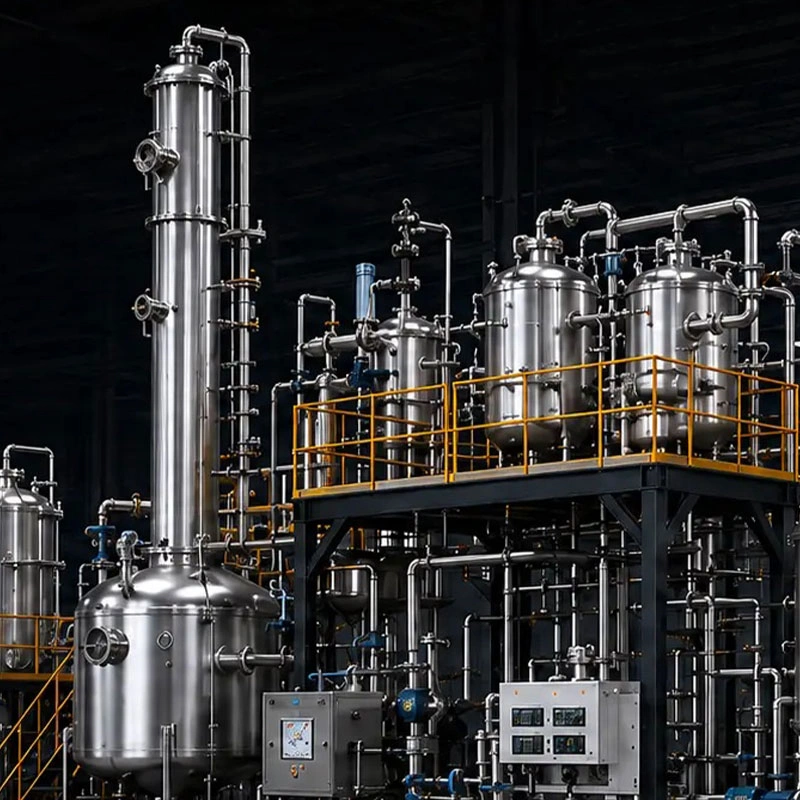
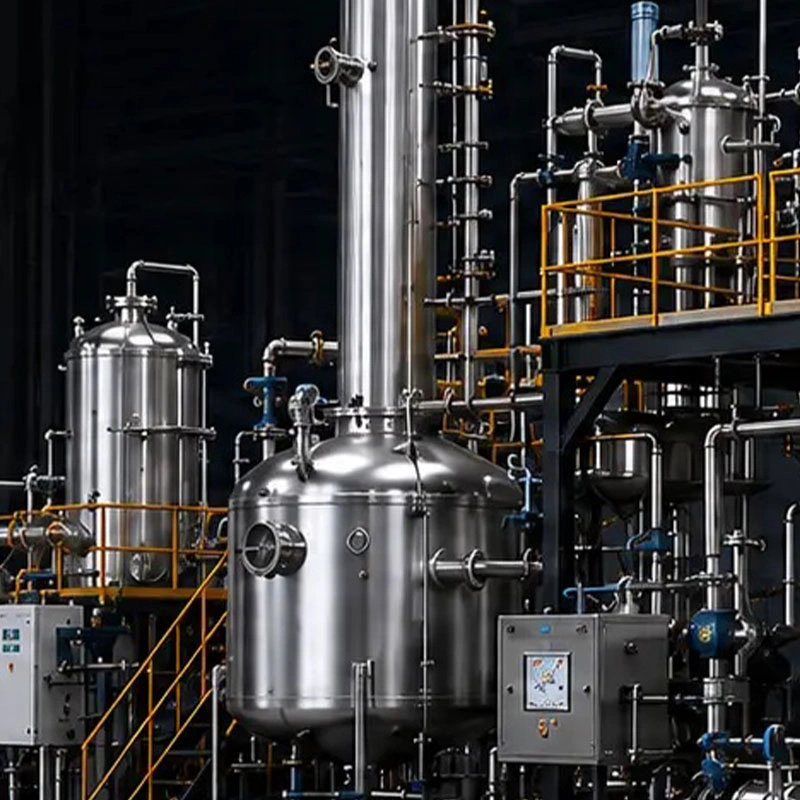
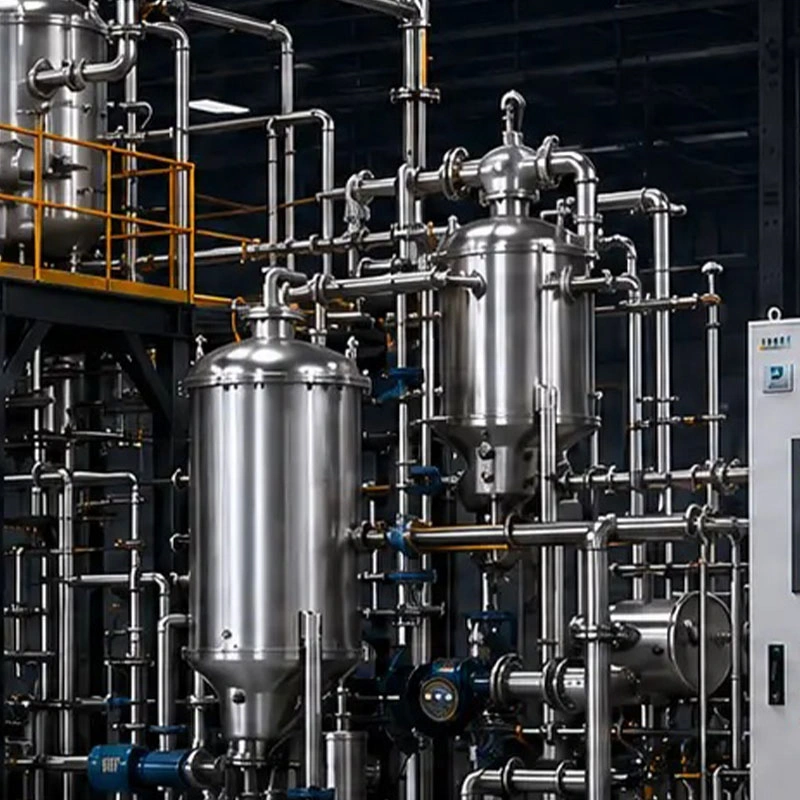
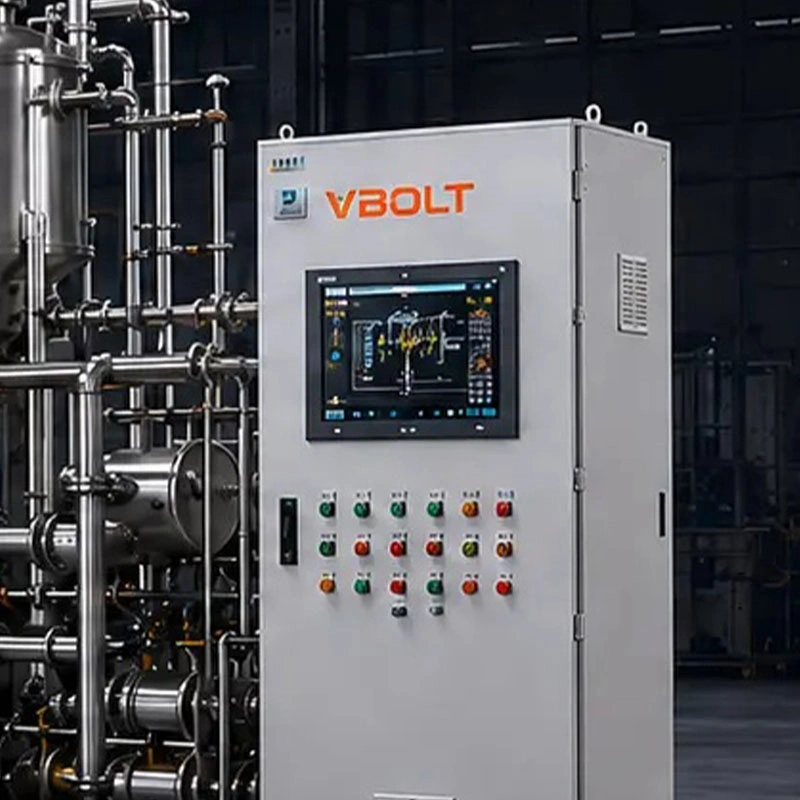
Equipment views show the reaction, methanol recovery, biodiesel purification and automatic control modules.
USED COOKING OIL BIODIESEL PLANT
Complete UCO-to-B100 Production Line
Process-contact equipment is configured in stainless steel, with black skid frames, yellow safety rails and centralized PLC + HMI control.
———— 13
Frequently Asked Questions
Common questions before selecting a used cooking oil biodiesel plant.
———— 14
Get a Process Proposal
Send your UCO analysis, required capacity, target standard and site conditions. VBOLT will prepare the process route and equipment configuration.
01 UCO type and analysis
02 Daily capacity and operating hours
03 Target fuel standard
04 Project country and utilities
USED COOKING OIL BIODIESEL PLANT